
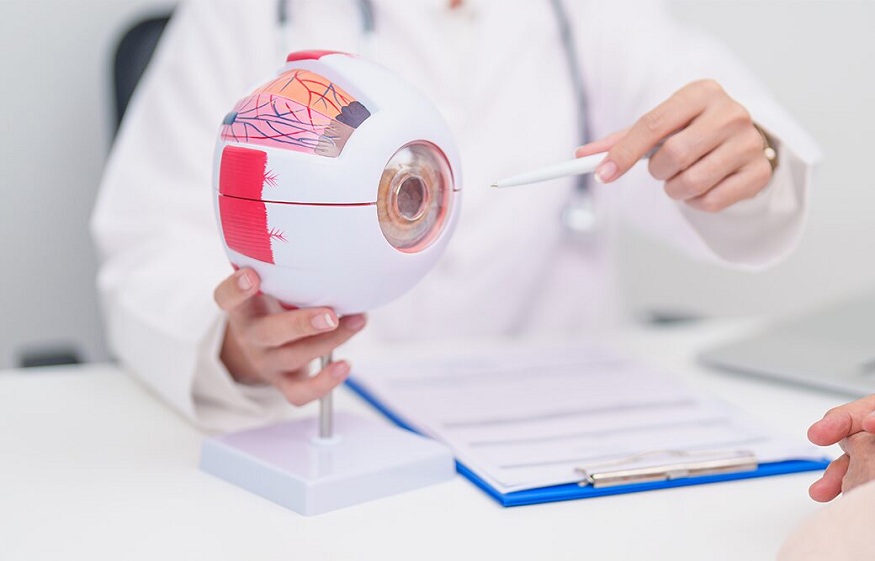
Dry age-related macular degeneration, commonly known as dry AMD, is a progressive eye condition that primarily affects the macula, the central region of the retina responsible for detailed and focused vision. Because the macula plays an important role in activities such as reading, recognizing faces, driving, and viewing fine details, changes in this area can gradually interfere with every day tasks.
As research and technology continue to advance, new approaches to treatment for macular degeneration are being explored to complement conventional disease-management strategies. Among these emerging approaches is non-invasive microcurrent stimulation, a technique designed to provide gentle electrical stimulation to retinal tissues through closed eyelids.
An insight into new-age treatment for macular degeneration
For many years, managing dry AMD largely involved regular eye examinations, monitoring for changes, addressing relevant risk factors, and using nutritional strategies when recommended by an eye-care professional. These approaches remain important, particularly because dry AMD can change over time. At the same time, advances in ophthalmic technology have encouraged researchers and clinicians to investigate additional methods of supporting retinal function. Non-invasive microcurrent stimulation represents one such area of interest. This type of treatment for macular degeneration uses carefully controlled, low-level electrical stimulation. Rather than requiring an injection or surgical procedure, the stimulation is delivered externally through specialized equipment positioned over closed eyes. The approach is intended to interact with retinal tissues gently while avoiding the need for invasive intervention. The goal is to encourage retinal cell activity, support visual function, and help individuals maintain useful vision while living with dry AMD.
Read More: The Core Benefits of Residential Programs for Adult Children Mental Health
During a typical session, a specially designed device is positioned over the patient’s closed eyelids. The equipment delivers a controlled microcurrent stimulus through the eyelid toward the underlying ocular tissues. The electrical stimulation is maintained at a low level and is designed to be comfortable for the patient. The objective is to stimulate retinal cells and support their activity. Researchers have been investigating whether this type of stimulation can influence cellular processes associated with retinal function and visual performance. Because the procedure does not involve injections or surgical access to the eye, it can provide a relatively simple treatment experience. The exact protocol, duration, frequency, and expected outcomes can vary depending on the specific technology and clinical program being used.
One of the notable features of microcurrent therapy is its non-invasive nature. A patient generally remains seated or comfortably reclined while the device is positioned over the eyes. The eyelids remain closed throughout the procedure. A treatment session may take approximately half an hour, although the duration depends on the particular device and protocol. Patients do not generally need anesthesia because the procedure does not involve needles, incisions, or direct contact with the surface of the eye. Following a non-invasive session, there is generally no surgical recovery period. Patients may be able to resume normal activities according to their clinician’s instructions.
Read More: What to Expect After 50 Guide to Hormone Optimization: Overview of the Tennessee Men’s Clinic
The primary interest in microcurrent-based approaches is their potential ability to support retinal function rather than physically removing damaged tissue. By delivering carefully controlled stimulation to retinal structures, the therapy is being explored as a way to encourage cellular activity and potentially support remaining visual capabilities.